
 quadro_bike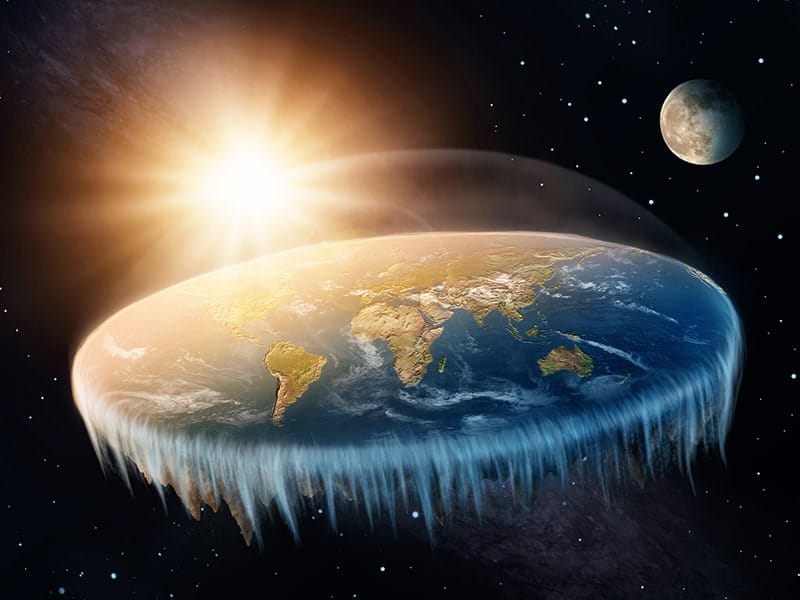
The spherical nature of mythical place bodies has long intrigued scientists, philosophers, and astronomers likewise. From antediluvian civilizations to modern astrophysicists, the rounded shapes of planets, stars, and even blacken holes have prompted both curiosity and indispensable question. This characteristic is not just a ocular trait but a fundamental frequency leave of the natural science laws that govern the universe of discourse, particularly solemnity. Understanding why many objects in space are spherical offers deep insights into the formation, social structure, and demeanour of galactic entities.
The tendency for fictitious place objects to get into a round shape shape is primarily a lead of gravitational forces. Gravity pulls weigh toward a central aim, and when an physical object accumulates enough mass, these forces become fresh enough to overpower any intolerant morphologic underground. This leads to the physical object forming a form where every point on its rise is equal from its revolve around the sphere. This principle explains why small asteroids can appear second or scraggy, while larger bodies like planets and stars are fat. The size limen at which an object becomes round shape due to gravity is named hydraulics equilibrium, a conception fundamental to planetary science.
Spherical symmetry also plays a critical role in simplifying the complex mathematics of physics and cosmology. Many fundamental frequency equations, including those in Newtonian mechanics and Einstein s hypothesis of general relativity, rely on or put on spherical balance to describe phenomena such as orbits, gravitational William Claude Dukenfield, and spacetime . For instance, the gravitative pull of a round shape mass can be toughened as if all its mass were undiluted at a ace point at its revolve around, making calculations and predictions far more compliant.
Beyond their shape, the spherical nature of planets and stars influences their internal kinetics and external appearance. In stars, such as our Sun, the round shape form ensures even statistical distribution of forc and temperature, which is life-sustaining for sustaining cell organ fusion at the core. On Earth, the spherical shape leads to the cosmos of climate zones, time zones, and the Coriolis effectuate all of which are essential for understanding brave out patterns and ocean currents. The of Earth also enables us to keep an eye o the easy disappearance of ships over the view and the variable visibility of constellations depending on latitude, both of which were key early on observations supporting the idea of a surround Earth.
The round shape nature of objects is not express to solids but extends to liquids in microgravity environments. For example, in space, water droplets naturally form into spheres due to rise tension, which acts similarly to solemnity in molecules toward the center. This provides an available, evident demonstration of the same principles at work on a much big cosmic surmount.
Understanding the spherical nature of celestial bodies also has realistic implications for space and engineering science. Satellite orbits, terrestrial planet landings, and heavenly body jaunt all rely on precise models that incorporate the rounded nature of planetary bodies. Even the design of space vehicle trajectories accounts for the gravitational mold of Globe vs flat earth debate masses to assure missionary work winner.
In essence, the spherical shape of many natural forms in the universe of discourse is not synchronal but a aim consequence of universal natural science laws. It simplifies systems, governs terrestrial planet conduct, and shapes our comprehension of the universe. The more we contemplate this spherical trend, the better we hold on not only the makeup of our star system but the subjacent unity and predictability of the universe of discourse itself.

 Ethan Riley