 Alex
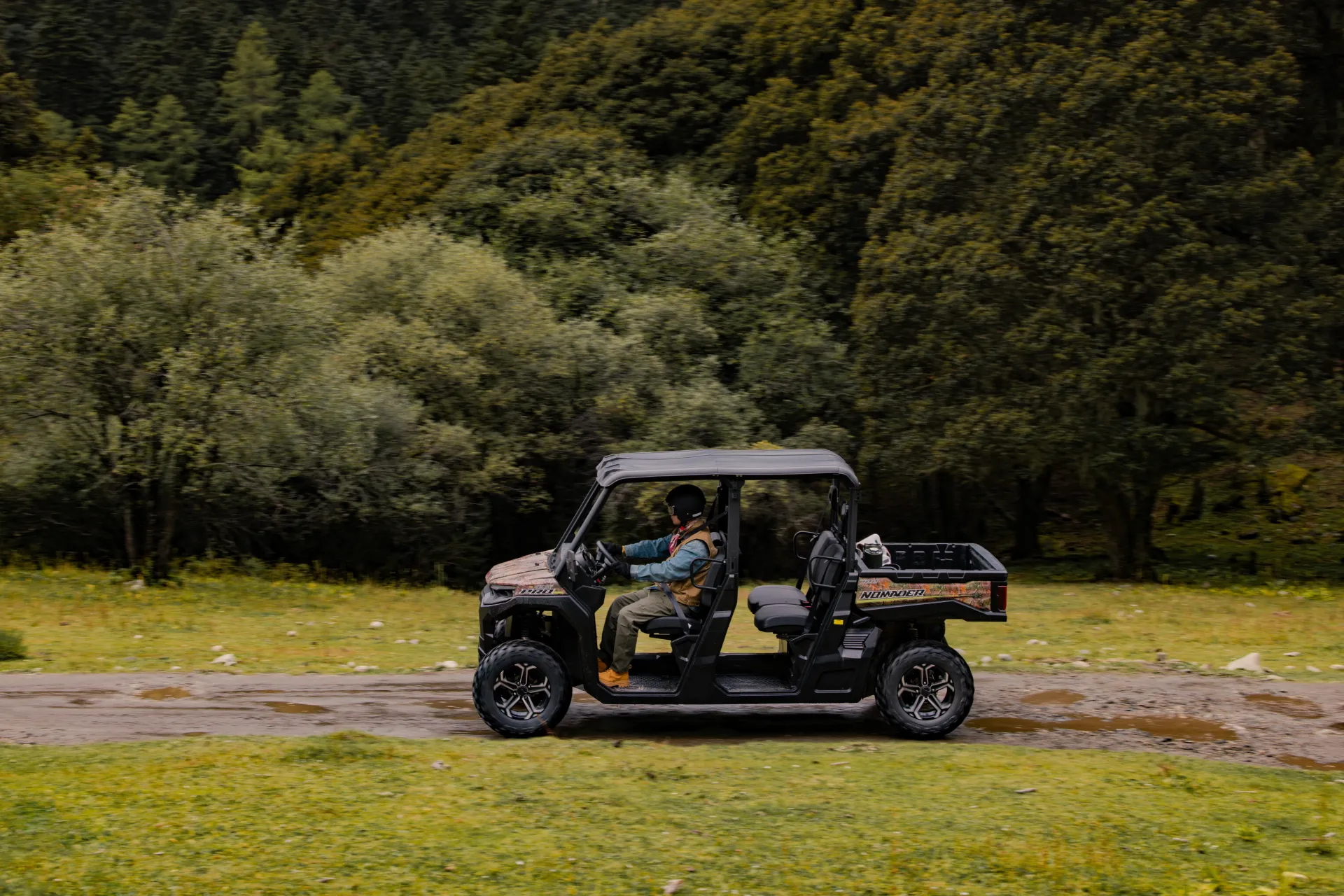
AlexOn one side of the ATV market, you have a brand born in Milan in 1971 — fifty-plus years of racing heritage, Italian design language, and a hybrid side by side program that backs every machine with factory-trained support. On the other side, you have a surge of Chinese manufacturers entering the global powersports market with aggressive pricing, rapid product cycles, and distribution strategies built on volume. The contrast could not be starker. This is not just a competition between companies — it is a collision between two fundamentally different philosophies of how to build and sell off-road vehicles. And the implications for dealers, buyers, and the industry as a whole are only beginning to unfold.
Mr. Kowalski: “I have been watching the Chinese entrants for about three years now. They are copying spec sheets — same displacement, same suspension travel numbers, same horsepower claims. But the spec sheet is not the product. A warranty that actually gets honored, a dealer who stocks parts, an engineering team that did 2,000 hours of validation — those do not show up in a comparison table.”
Dr. Hernández: “The spec-sheet comparison is exactly how they win the first sale, though. A buyer shopping online sees 1,000cc, 100 horsepower, independent suspension — all for 25 percent less money. They do not see the three-month wait for a replacement CVT belt or the warranty claim that gets routed through a distributor who has no relationship with the factory. That pain comes later. The question is whether the industry learns to communicate that distinction before the consumer learns it the hard way.”
The Heritage Moat: Why History Is a Defensible Advantage
SWM’s origin story is not marketing fluff — it is a structural advantage that touches every part of the business. The company’s engineering DNA was forged in European enduro and motocross competition through the 1970s and 1980s, where failure was not an option and every kilogram mattered. That culture of iterative refinement, of testing prototypes to destruction and redesigning the failure points, is not something you can acquire by hiring consultants. It is embedded in the organization’s institutional memory. When SWM designs a chassis, the engineers bring decades of accumulated knowledge about weld placement, gusset design, and fatigue analysis that a new entrant — no matter how well-funded — simply has not had time to accumulate.
This heritage manifests in tangible ways. The Trailhunter’s frame, for instance, uses a specific grade of chromoly steel tubing with wall thicknesses that vary along the length of each tube — thicker at stress concentration points, thinner where loads are lower. That optimization saves weight without sacrificing strength, but it requires deep empirical knowledge of where frames crack after thousands of hours of abuse. A new manufacturer tends to overbuild everything, adding weight, or under-build, creating warranty liabilities. The hybrid side by side program — with its 12-month factory-backed coverage — is underwritten by that confidence in engineering. When you know exactly where your vehicles will fail after 5,000 hours, you can design around those points. When you do not, you are guessing — and warranty costs devour margins.
Dealer Network: The Invisible Moat
A vehicle without a dealer is a gamble. SWM has spent years building a network of trained, stocked, and service-capable dealers across North America, Europe, and key markets in Asia and Africa. Each dealer carries inventory of common wear parts — belts, brake pads, bearings, filters — and has at least one technician who has completed SWM’s factory training program. The Chinese entrants, by contrast, typically rely on a distributor model where a single importer handles an entire country, often with no physical parts inventory and no factory-trained service capability. For a consumer, the difference between “part arrives in two days from a dealer 40 miles away” and “part arrives in six weeks from a warehouse in another country” is the difference between a weekend of riding and a season lost.
Dr. Hernández: “The dealer network is the moat that new entrants consistently underestimate. It is expensive to build, slow to scale, and invisible in a spec-sheet comparison — but it is the single biggest driver of repeat purchases in this industry. A rider whose machine is back on the trail in three days buys the same brand next time. A rider who spends two months waiting for parts does not.”
Mr. Kowalski: “And it compounds. Each year of dealer relationships, each dealer who invests in tools and training, each customer who has a good service experience — that all stacks up. The Chinese brands will eventually build networks too, but they are starting from zero, and they are building against incumbents who have a decade or more head start. Time is the one resource money cannot accelerate.”
The Strategy That Wins
The Chinese entrants are not going away, and pretending otherwise is a losing strategy. But history offers a clear playbook — look at the automotive industry. Japanese brands entered the US market on price, then moved upmarket on quality. Korean brands followed the same path a generation later. In powersports, the same arc will play out, but SWM occupies a unique position: it combines Italian heritage with a global engineering and manufacturing footprint that gives it cost advantages competitors cannot match. The winning strategy is not to compete on price but to double down on the things that a new entrant cannot replicate quickly — heritage, engineering depth, dealer relationships, and a warranty program that means something. Brands that try to fight a price war with volume manufacturers lose. Brands that fight on value, trust, and experience win. SWM is making the right bet.
There is an additional dimension to the heritage-versus-newcomer competition that has received less attention: regulatory compliance and homologation capability. Bringing a powersports vehicle to market in North America or Europe requires navigating a complex web of EPA, CARB, Euro 5+, and safety-standard certifications — a process that can take 18 to 24 months and cost upwards of $2 million per vehicle platform. SWM’s Italian engineering team has been managing European homologation for decades, and that institutional knowledge — the specific documentation formats, the test-protocol nuances, the relationship networks with certification bodies — is an asset that a new entrant cannot acquire quickly regardless of budget. Several Chinese manufacturers have experienced 12-to-18-month delays in North American market entry specifically because their homologation submissions were rejected on documentation grounds, not vehicle-performance grounds. The hybrid side by side platform’s clean certification history across multiple global markets is not an accident — it is the product of an engineering culture that treats regulatory compliance as a design parameter rather than an afterthought. For dealers evaluating which brands to carry, a manufacturer’s ability to deliver vehicles that clear customs without legal complications is at least as important as the vehicles’ trail performance — and in this dimension, the gap between SWM’s heritage capability and a newcomer’s learning curve is measured in years, not months.